Europe
A look into how other cities around the world are fostering play in their communities, and what we can learn from them. Select a continent below to learn more.

Copenhagen, Denmark
Culture of Play
Scandinavian countries see play as essential rather than only a pastime and view “the outdoors as a place of adventure, education, leisure, and all-around connection.” (Bentsen et al., 2009)

Culture of Play
Scandinavian countries see play as essential rather than only a pastime and view “the outdoors as a place of adventure, education, leisure, and all-around connection.” (Bentsen et al., 2009)
Forest Schools
“Forest schools foster critical thinking, systems thinking and collaboration abilities.” (UNESCO 2024)
Engage in risky play and exploration
Denmark also held “free-time schools” for children until the age of 10. (Alexander 2025)
Learn to navigate stressful situations

Hygge
-
Hygge - time with family and friends
-
Prioritize social connection
-
Play at BLOX
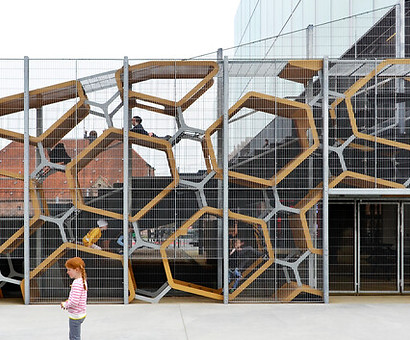
BLOX is a multifunctional building in Copenhagen and is home to the Danish Architecture Center (DAC), playscape, a fitness center, an underground car park, and twenty-two apartments.
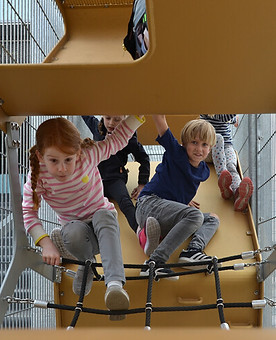
Play is found both inside and outside of the building. On the exterior, there is a multipurpose staircase that acts as a staircase, sitting area, slide, and trampoline. Next to the staircase, there is a vertical climbing facade that children can climb through the various zones and there are even sitting areas for parents inside the structure.
Ride a spiral slide down the building instead of taking the stairs or elevator, in the Danish Architecture Center.


Additional Examples of Play in Copenhagen


How is Denmark Succeeding
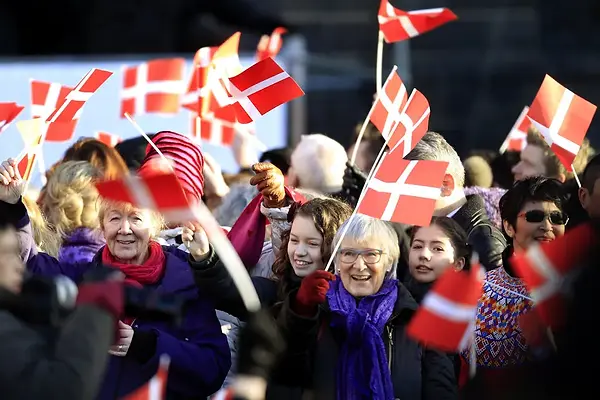
According to the Organization for Economic Co-operation and Development (OECD), Danish people are named the “happiest people on Earth” for 40 years in a row, (Alexander, 2025).
Strong Government Welfare Systems
Although the Danes have one of the highest tax rates, citizens are willing to pay these rates to fund the strong welfare systems of the country. Denmark provides free education, subsidized child care, and a free healthcare system (Ministry of Foreign Affairs of Denmark).
Danes have a good work life balance, with “only 2 percent of employees regularly work very long hours, compared with the OECD average of 13 per cent” (Higginbottom, 2017). There is even a Danish word for workplace happiness, Arbejdsgloede.
Safety and Security
Strong social trust of each other, government, businesses, police among the Danes.
Denmark is one of the safest places to live. According to Institute for Economics & Peace, Denmark ranked 8th in most peaceful countries in the world. For comparison, the United States does not even rank top 20.
Bike-Friendly Nation
The major transportation method in Denmark is biking. The streets are designed towards bikes and transportation and getting around becomes a physical activity.
***add additional info from the Instagram post?***